
Where a preview helps
- Choosing an exact dry-length reference
- Comparing a graphic outline with greater styling flexibility
- Planning a staged move from long hair to a shorter cut
Side-by-side hairstyle decision guide
A bob usually finishes around the jaw or upper neck; a long bob reaches closer to the collarbone. The shorter line feels sharper and exposes more neck, while the extra length of a lob keeps more tying and styling options.
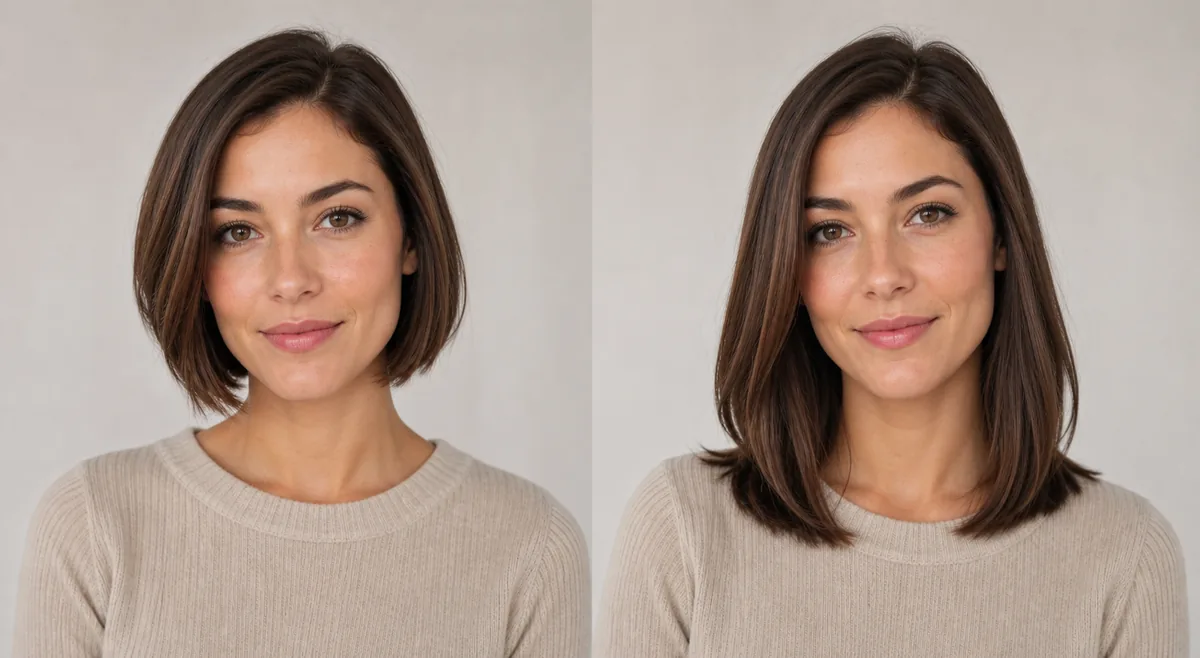 BobLong bob
Before the appointment
Judge both cuts at their intended dry length. A one-inch change can alter jaw framing, shoulder contact, and how full the ends look. Preview both outlines on the same photo, then ask a stylist how natural wave and density will change the final line.
| Decision point | Bob | Long bob |
|---|---|---|
| Typical outline | Jaw to upper neck | Lower neck to collarbone |
| Visual effect | Compact and defined | Longer and more fluid |
| Tying back | Often limited | Usually more practical |
| Common issue | Frequent shape upkeep | Ends can meet the shoulders |
What to tell your stylist or barber
Point to the exact landing point on your jaw, neck, or collarbone and specify whether the edge should stay blunt or gain internal movement. Ask the stylist to confirm the dry length rather than relying on the word “bob.”
Photo setup
Use a level portrait that includes the jaw, neck, and shoulders. Keep the camera distance and head position identical when comparing both lengths.
In the Android app
Use a front-facing photo with your face and hairline visible in even light.
Choose a haircut, hairstyle, or hair color and let Glowify create the preview.
Keep favorite before-and-after results as a starting point for your salon or barber conversation.
Common questions
Not always. It offers more tying options, but shoulder contact can make the ends flip. The shorter bob may need more frequent trims to keep its precise line.
Keep the same photo and parting, then change only the perimeter. Compare where the dry outline sits against the jaw, neck, and shoulders.
Use the image as a reference, not a measurement. Texture, density, head position, and drying can change where the real perimeter settles.
Nearby options
Use the alternatives below to isolate the detail that matters most to your decision.
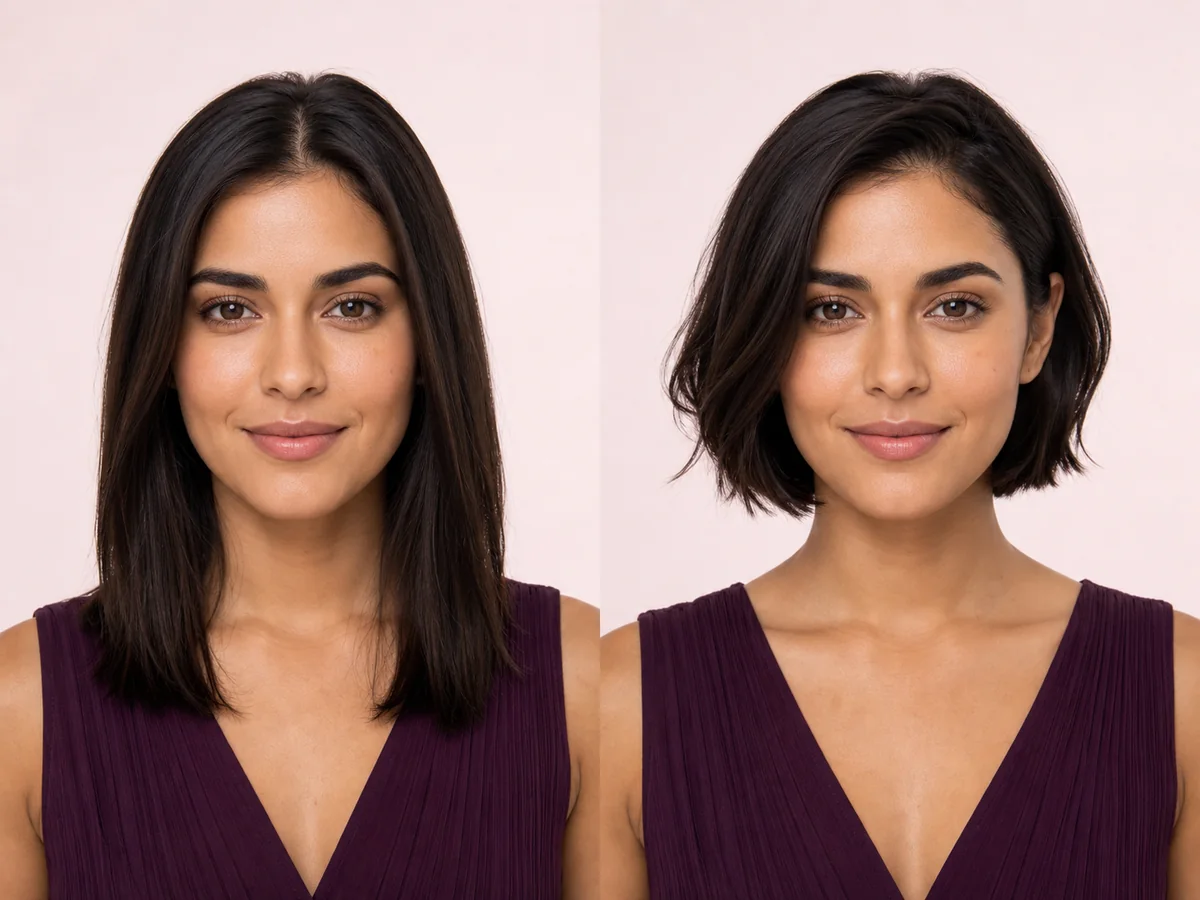
A bob changes the outline around your jaw and neck, so even a small shift in length can feel dramatic. Preview the silhouette on your own face before deciding where the line should fall.
Explore this look →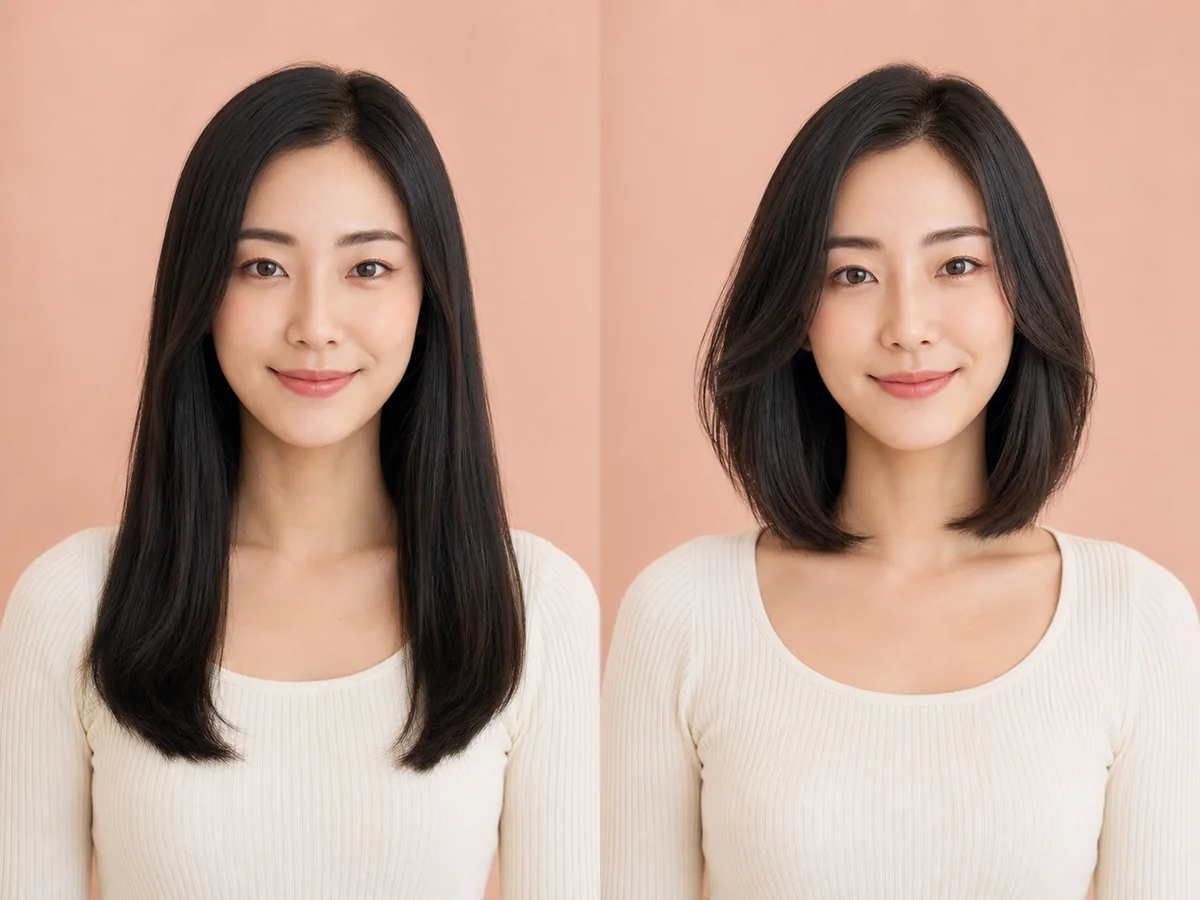
A long bob—or lob—is a lower-commitment route into shorter hair. It keeps enough length for many ponytails while introducing a stronger, lighter outline around the shoulders.
Explore this look →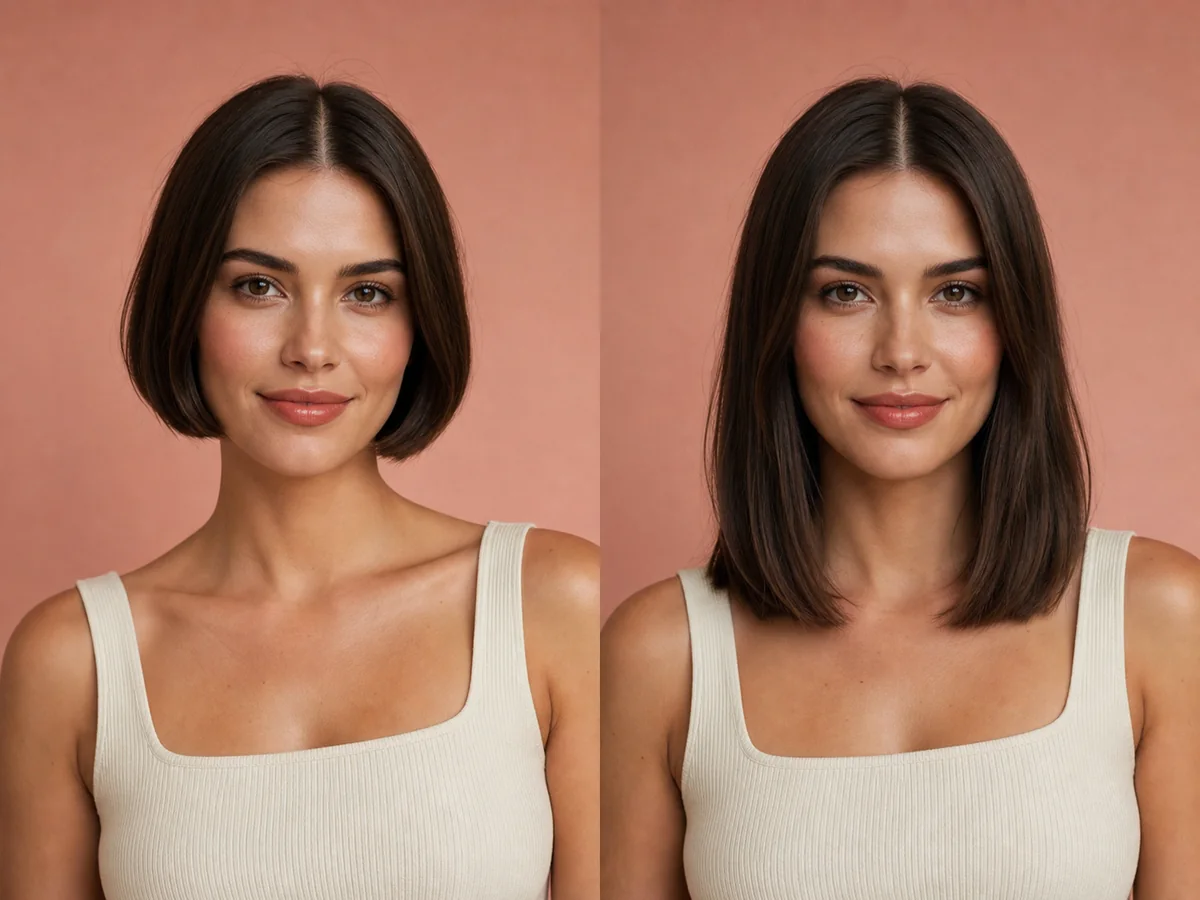
A bob can be adjusted to almost any personal style, but its length has a strong effect on the jaw, neck, and shoulder line. Preview several reference points instead of judging one generic bob.
Explore this look →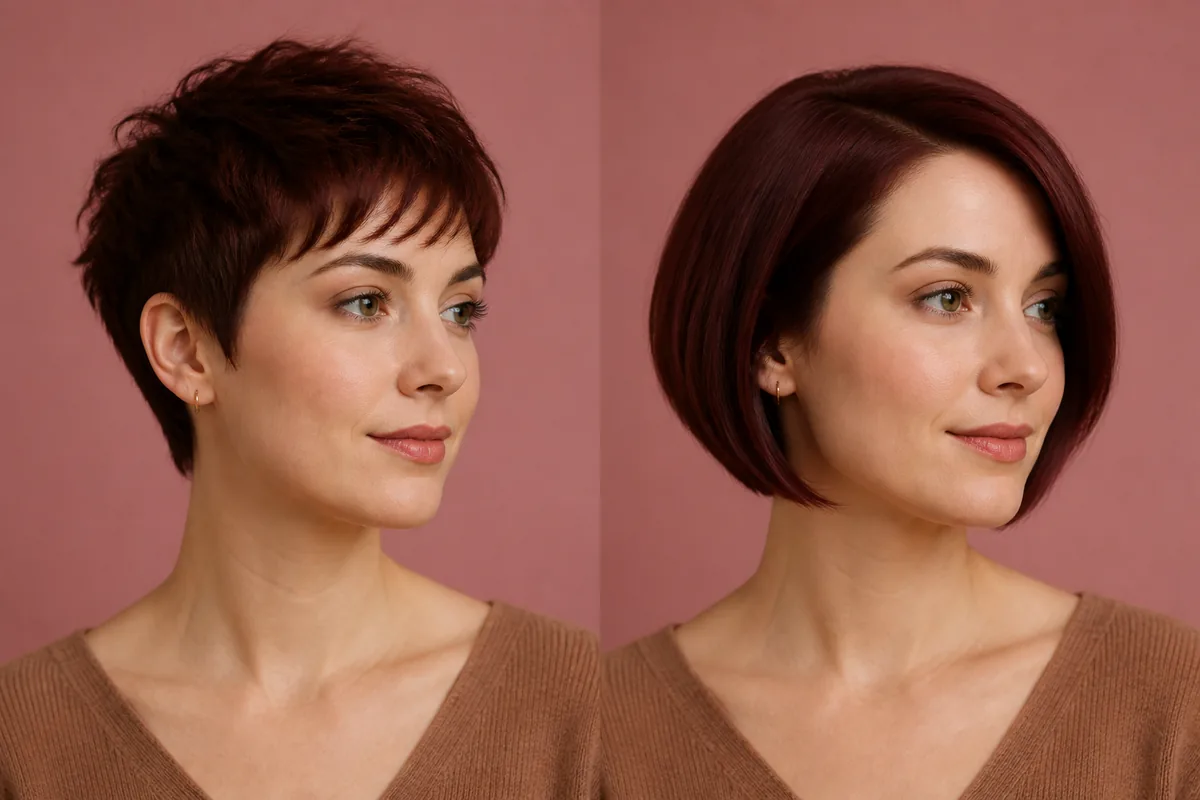
A pixie exposes the ears and neckline and relies on short sections through the sides and crown. A bob keeps a continuous perimeter around the face. The decision is therefore about structure and coverage, not just removing a few more inches.
Explore this look →Take the next step
Open Glowify on Android, compare the result, and bring the useful details to your stylist or barber.